SemiAnalysis: The Grid is Old and Tired
Date
12.30.25
Author
VE
Type
Analysis
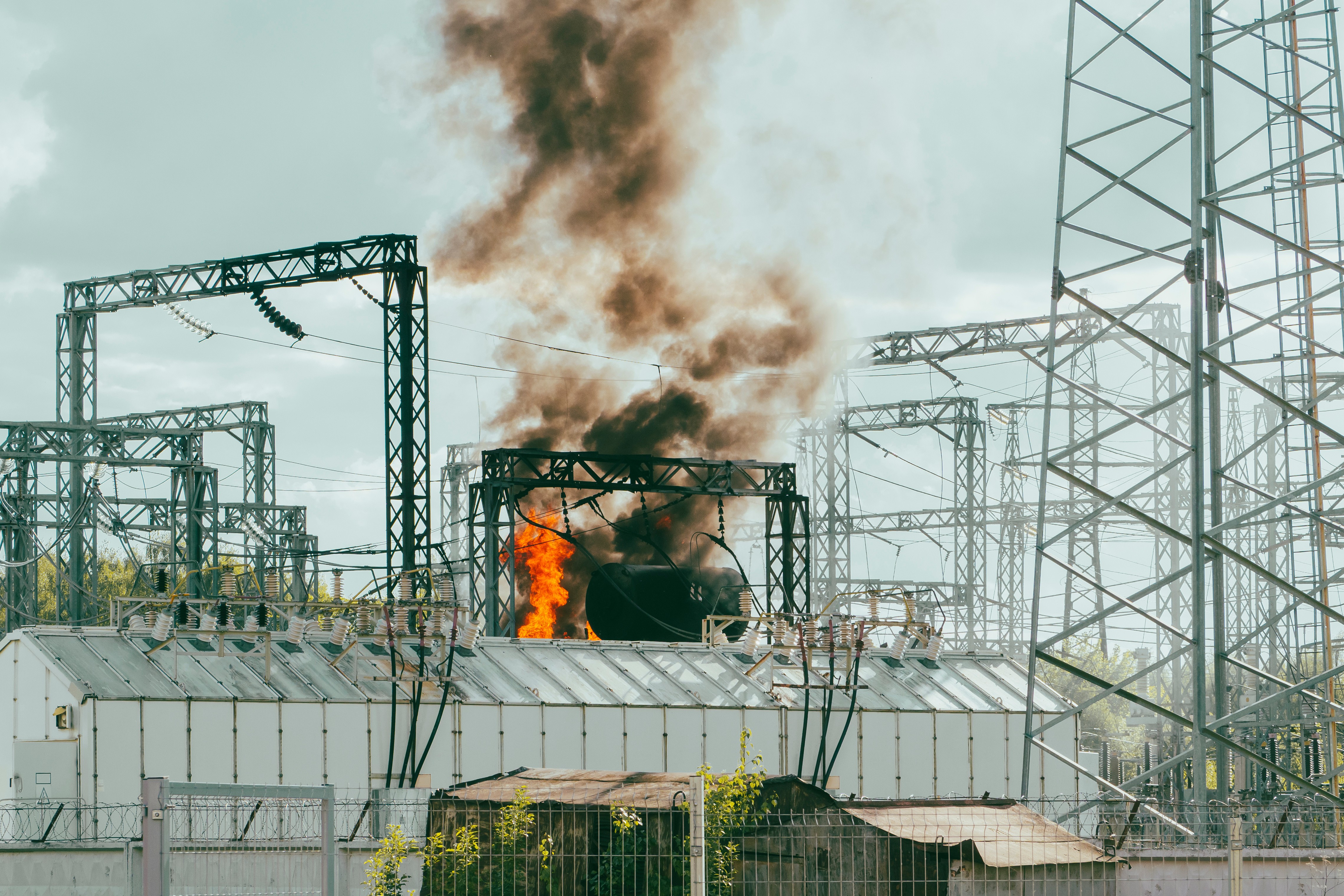
A recent deep dive by SemiAnalysis into onsite gas generation reveals a significant structural shift: the world’s leading AI labs can no longer wait for the electrical grid to connect their projects, in many areas they must become their own power provider.
As these organizations scale toward ever larger clusters, the traditional utility model has become a liability. The resulting trend toward 'power-first' development represents the most significant shift in industrial strategy since the birth of the cloud.
The Grid as a Legacy Bottleneck
Historically, data centers were passive consumers of the grid. However, the timelines required for utility-scale upgrades—often spanning 5 to 10 years—are fundamentally incompatible with the six-month iteration cycles of generative AI.
The math is straightforward. A state-of-the-art cluster can generate upwards of $10 billion in annual revenue. In that context, waiting years for a grid connection isn't just an inconvenience; it is a massive opportunity cost. By deploying onsite natural gas turbines and reciprocating engines, labs like xAI and OpenAI are prioritizing speed to market over traditional utility dependence, despite demonstrably higher cost and environmental impact.
The Rise of the Sovereign Data Center
While much of the industry views onsite generation as a "bridge" until grid power arrives, the strategic advantages of fully off-grid operations are becoming harder to ignore.
The move toward energy independence offers three distinct advantages:
Speed to Compute: Bypassing the grid allows for deployment in months rather than years. Organizations can build where the fiber is, rather than where the power capacity happens to be.
Operational Autonomy: Off-grid centers are insulated from the volatility and physical fragility of the aging public macro-grid. For a $5 billion training run, the reliability of a dedicated, onsite power source is a tier-one requirement.
Vertical Energy Integration: We are seeing the emergence of "wellhead-to-compute" models. By co-locating near fuel sources—be it natural gas pipelines today or Small Modular Reactors (SMRs) tomorrow—labs eliminate transmission losses and the regulatory friction of public utility commissions. The investments required here are substantial.
Market Implications
This "Industrial AI" era creates a new hierarchy in the tech sector. The competitive moat is no longer just the model architecture; it is the ability to master heavy infrastructure.
Companies capable of building private, off-grid power ecosystems can scale at their own pace. Conversely, those tied to the legacy grid will likely find their growth capped by the slow-moving realities of public infrastructure. The "cloud" is becoming increasingly depending on private on prem power generation, marking a permanent departure from the capital-light software models of the past decade.
A recent deep dive by SemiAnalysis into onsite gas generation reveals a significant structural shift: the world’s leading AI labs can no longer wait for the electrical grid to connect their projects, in many areas they must become their own power provider.
As these organizations scale toward ever larger clusters, the traditional utility model has become a liability. The resulting trend toward 'power-first' development represents the most significant shift in industrial strategy since the birth of the cloud.
The Grid as a Legacy Bottleneck
Historically, data centers were passive consumers of the grid. However, the timelines required for utility-scale upgrades—often spanning 5 to 10 years—are fundamentally incompatible with the six-month iteration cycles of generative AI.
The math is straightforward. A state-of-the-art cluster can generate upwards of $10 billion in annual revenue. In that context, waiting years for a grid connection isn't just an inconvenience; it is a massive opportunity cost. By deploying onsite natural gas turbines and reciprocating engines, labs like xAI and OpenAI are prioritizing speed to market over traditional utility dependence, despite demonstrably higher cost and environmental impact.
The Rise of the Sovereign Data Center
While much of the industry views onsite generation as a "bridge" until grid power arrives, the strategic advantages of fully off-grid operations are becoming harder to ignore.
The move toward energy independence offers three distinct advantages:
Speed to Compute: Bypassing the grid allows for deployment in months rather than years. Organizations can build where the fiber is, rather than where the power capacity happens to be.
Operational Autonomy: Off-grid centers are insulated from the volatility and physical fragility of the aging public macro-grid. For a $5 billion training run, the reliability of a dedicated, onsite power source is a tier-one requirement.
Vertical Energy Integration: We are seeing the emergence of "wellhead-to-compute" models. By co-locating near fuel sources—be it natural gas pipelines today or Small Modular Reactors (SMRs) tomorrow—labs eliminate transmission losses and the regulatory friction of public utility commissions. The investments required here are substantial.
Market Implications
This "Industrial AI" era creates a new hierarchy in the tech sector. The competitive moat is no longer just the model architecture; it is the ability to master heavy infrastructure.
Companies capable of building private, off-grid power ecosystems can scale at their own pace. Conversely, those tied to the legacy grid will likely find their growth capped by the slow-moving realities of public infrastructure. The "cloud" is becoming increasingly depending on private on prem power generation, marking a permanent departure from the capital-light software models of the past decade.
Let's Get to Work